

TL;DR
- Cameco is benefiting from a stronger uranium market and renewed interest in nuclear power, helped by rising electricity demand from AI and data centers.
- Q1 2026 was strong, with net earnings of $131 million, adjusted net earnings of $203 million, and adjusted EBITDA of $509 million.
- Operations and contracting are supporting results, and Westinghouse contributed (Cameco’s share of Westinghouse adjusted EBITDA was $122 million in Q1 2026).
- The main risk is valuation. When a stock trades at a very high earnings multiple (around 100 times earnings), even good results can produce lower future returns, or even losses, if the multiple later compresses.
The energy landscape is transforming, and nuclear power is becoming a bigger part of the conversation. As global demand for reliable, carbon-free baseload power rises, especially to support the rapid growth of artificial intelligence and energy-hungry data centers, Cameco (TSX:CCO)(NYSE:CCJ) is often viewed as one of the best-positioned uranium names in the market. There is an important wrinkle for investors right now, though. The stock has run hard, and the valuation is no longer cheap.
Cameco’s first-quarter 2026 results show why the market has been excited. For the quarter ended March 31, 2026, the company reported net earnings of $131 million, adjusted net earnings of $203 million, and adjusted EBITDA of $509 million. The uranium segment did most of the heavy lifting. It generated earnings before income taxes of $358 million and adjusted EBITDA of $423 million, up from $227 million and $286 million in the same quarter last year. Management attributed the improvement mainly to higher sales volumes and a higher average realized price under its market-related contracts.
The Catalyst: A Structural Shift in Uranium Prices
To understand Cameco’s recent financial momentum, it helps to start with the commodity itself. Uranium prices have moved higher over the last few years as supply has tightened and demand has improved.
The spot market is still volatile. Prices spiked above $100.25 per pound in January 2024, then cooled into the $60s and $70s through late 2024 and mid-2025. More recently, spot prices strengthened again. By January 2026, they surged to $94.28 per pound before settling at $86.35 per pound by April.
For a major producer like Cameco, the long-term price is often the more important metric. Utilities that want dependable fuel supply for the next decade are increasingly willing to pay up to lock in deliveries. That is why the steady climb in long-term uranium pricing matters so much:
- Early 2024: Hovering around the $72.00 to $77.00 mark.
- Throughout 2025: Steadily climbing from $81.00 to end the year at $86.50.
- Spring 2026: Pushing past the $90 threshold to sit securely at $91.50 per pound by March and April.
This kind of long-term pricing environment is where Cameco tends to do well. Its contracting strategy is designed to capture higher prices over time, so strength in the broader uranium market can translate into stronger cash flow and earnings, like we saw in Q1.
Operational Execution and the AI Tailwind
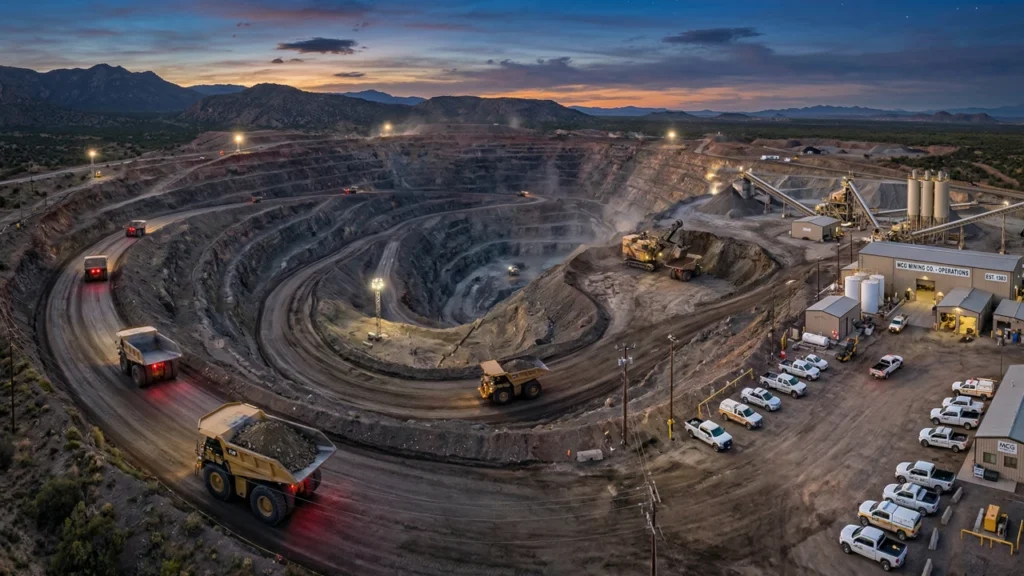
Operationally, the company continues to execute with discipline. McArthur River and Key Lake packaged 5.0 million pounds of U3O8 in the quarter, with 3.5 million pounds attributable to Cameco. Cigar Lake produced 4.9 million pounds, with 2.7 million pounds attributable. Total packaged production for the quarter was 6.2 million pounds attributable to Cameco. On the demand side, Cameco noted that uranium sales volumes were higher year over year. Beyond uranium mining, the company’s strategic stake in Westinghouse also contributed, with Cameco’s share of Westinghouse adjusted EBITDA at $122 million for Q1 2026.
A big driver behind the renewed interest in nuclear is the idea of a nuclear renaissance, and the AI angle is part of it. Data centers need power that is steady, scalable, and available around the clock. Renewables like solar and wind can be great additions to the grid, but they often need backup generation or large-scale storage to provide 24/7 reliability. That is why nuclear keeps showing up in discussions about energy security and decarbonization. If governments and utilities keep moving in this direction, long-term uranium supply and fuel services become even more important, which puts Cameco’s tier-one asset base front and center.
Financial Fortress vs. Valuation Reality
Cameco also points to balance sheet strength. As of March 31, 2026, it reported $1.1 billion in cash, cash equivalents, and short-term investments. It also had $1.0 billion in total debt and a $1.0 billion undrawn revolving credit facility. In a cyclical commodity business, that liquidity can be a real advantage. It gives the company flexibility and helps it avoid rushing into unfavourable decisions when spot prices swing.
With top-tier uranium assets, an integrated fuel strategy, and exposure to the broader nuclear ecosystem through Westinghouse, Cameco has a credible long-term setup. For investors who want exposure to nuclear power and the electrification megatrend, including AI-driven data demand, it belongs on a watchlist.
The catch? The entry price.
The catch is the entry price. At a stretched earnings multiple, the margin for error is thin. Future returns may depend less on whether Cameco is a good business and more on whether today’s valuation already prices in years of strong execution. For example, if you buy a stock at 100 times earnings and the market eventually decides it should trade at 40 times earnings, you can end up with a disappointing outcome. Earnings might grow, but the share price could still be flat or even decline because investors are no longer willing to pay the same premium for each dollar of profit.
It is also worth remembering what can go wrong. Uranium prices can be lumpy. Mining operations face routine risks such as unexpected outages, maintenance timing, and cost pressure. Nuclear policy support can also shift with political cycles. None of these risks make Cameco a bad company, but they matter more when a stock is priced with a lot of optimism.