

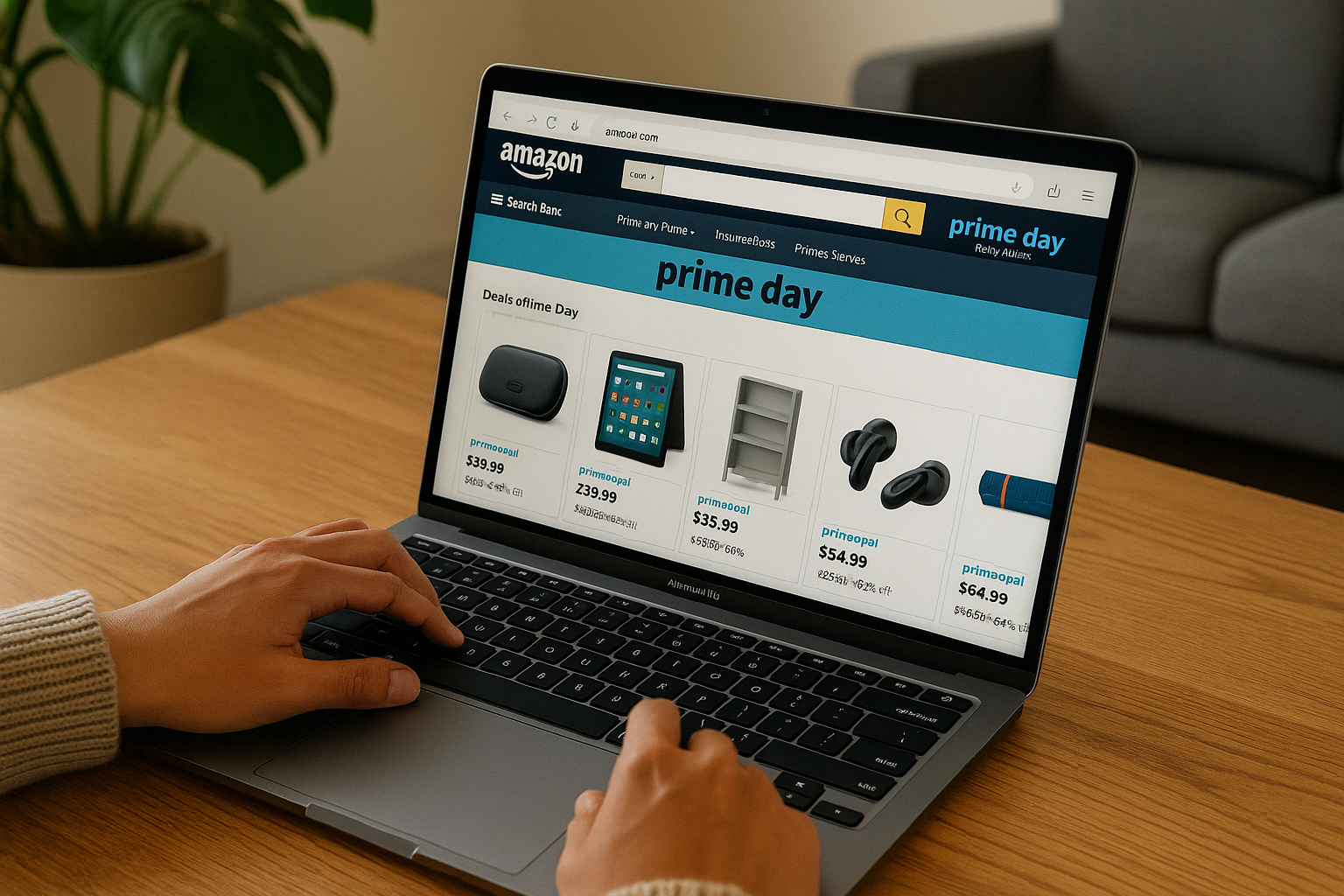
Amazon (NASDAQ: AMZN) just wrapped up its biggest Prime Day event ever, delivering record-breaking sales across a newly extended four-day shopping window. U.S. consumers spent a total of $24.1 billion online during the week—a 30.3% surge from last year’s Prime window—yet the stock’s performance has barely budged, with Amazon shares up less than 3% in 2025.
While early signs hinted at lukewarm shopper enthusiasm—Momentum Commerce initially reported a 41% drop in first-day sales compared to 2024—Amazon quickly rebutted those figures and finished strong. Internal data and analytics from partners like Flywheel confirmed that the back half of the event saw a notable sales spike, culminating in a 165% year-over-year increase on Thursday alone.
Customer engagement also played out differently this year. With a four-day event replacing the usual two, Prime Day morphed from a quick-hit discount spree into a more deliberate shopping marathon. The result? More time for deal comparisons, and potentially more lost sales to competitors like Walmart, Target, and Costco, which all ran concurrent events. According to Numerator, over half of Amazon shoppers compared prices before checking out, and 49% also planned to shop Walmart’s event.
Despite these challenges, Amazon’s e-commerce engine proved resilient. Independent sellers on the platform reported record sales, and two-thirds of purchases came in under $20, indicating strong traction in essential and everyday categories. Popular items included back-to-school supplies, electronics, and branded consumables like Liquid I.V., which ranked among the top-selling items.
Still, the broader impact on Amazon’s stock has been subdued. The shares rose just 1.2% on the final day of Prime Week, in line with historical trends, but not enough to meaningfully boost its lackluster year-to-date return.
For investors, Amazon remains a mixed bag in the short term. The retail and advertising strength highlighted during Prime Week reaffirms the platform’s consumer pull, but market competition and pricing visibility may weigh on future margins. With shares up less than 3% so far this year, Amazon could appeal to long-term growth investors willing to wait for stronger performance from its cloud and logistics segments.
Key Prime Day Numbers:
- $24.1 billion in U.S. online spending during Prime Week, up 30.3% from 2024
- 165% year-over-year increase in Amazon sales on Thursday alone
- Over 150,000 orders placed by more than 52,000 households on Amazon
- Average Prime Day order value: $53.34