

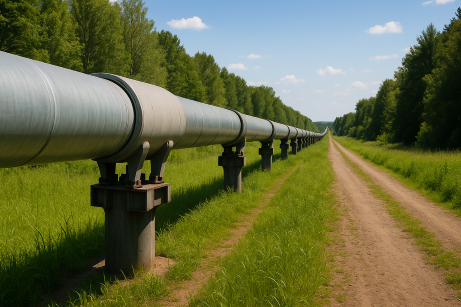
Canada is well-positioned to be a global energy leader, but according to Enbridge CEO Greg Ebel, federal regulations are holding the country back. Despite having world-class reserves of oil, natural gas, uranium, and critical minerals, Canada’s ability to build the infrastructure needed to meet global demand remains constrained. “We have everything set up,” Ebel said this week. “The only thing that’s stopping us is ourselves.”
The comments follow Alberta’s $14 million commitment to support a new pipeline proposal to British Columbia’s northwestern coast. Enbridge, along with South Bow and Trans Mountain, is part of a technical advisory group but has not committed to participating in the project itself. B.C. Premier David Eby has already pushed back, calling the proposal “not a real project,” citing the federal government’s oil tanker ban as a non-starter. Ebel echoed that view, asking bluntly, “If the tanker ban is there, why would you build a pipeline to the west coast?”
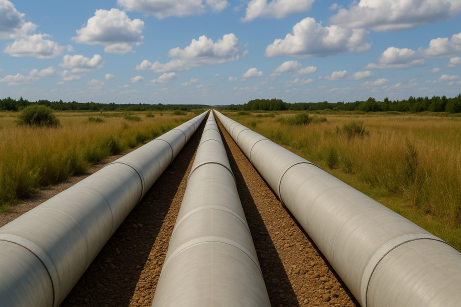
Enbridge has been down this road before, having been involved in the Northern Gateway pipeline that was cancelled in 2016. Ebel argues that regulatory uncertainty continues to discourage investment, despite recent steps by the federal government such as the launch of the Major Projects Office. While he welcomed the move, he stressed that “bespoke regulation is not a great way to formulate capital and bring it together.” What’s needed, according to him, is a clear national framework that attracts private capital and gives companies the confidence to pursue long-term projects.
To that end, Enbridge has taken a direct approach. The company has sent two formal letters to Prime Minister Mark Carney — one in April and another in September — on behalf of Canada’s leading energy firms. The letters outlined an action plan to unlock investment in the sector, including calls to eliminate the federal emissions cap and industrial carbon levy. While Ebel expressed optimism about Carney’s election-night message to “build, baby, build,” he emphasized that follow-through is now critical to turn sentiment into action.
Enbridge is still a good stock, despite the challenges
Despite the policy gridlock, Enbridge remains one of the most stable and rewarding investments in North America’s energy space. As the continent’s largest energy infrastructure firm, it operates an expansive network of crude oil and natural gas pipelines, as well as growing renewable assets. The company currently offers a 5.4% dividend yield and has increased its payout for 30 consecutive years, which is a rare track record in any industry.
Enbridge has also met its annual financial guidance for 19 straight years, underscoring the consistency of its earnings and management discipline. The company’s $14 billion acquisition of three U.S. natural gas utilities from Dominion Energy, announced in 2023, further strengthens its regulated asset base and provides new growth channels in U.S. markets. The acquisition is expected to be immediately accretive to earnings and support long-term dividend growth.
So far this year, Enbridge shares are up 16%, outperforming much of the Canadian energy sector and the broader market. For dividend-focused investors and those looking for dependable exposure to North American energy infrastructure, Enbridge remains a leading choice in a sector where few companies can match its combination of scale, resilience, and steady returns.