


Key Numbers:
- The bank is cutting costs and is aiming for up to $2.5 billion in annual cost savings.
- It is deploying a new buyback program worth $6 billion.
- TD stock is up 45% year-to-date.
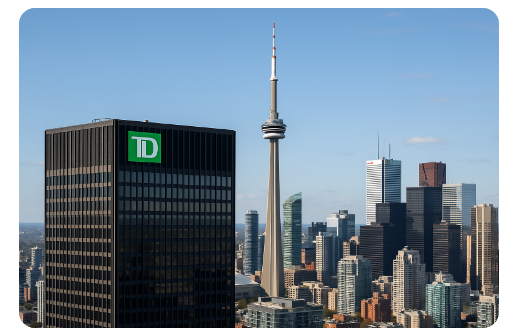
Toronto-Dominion Bank (TSX:TD)(NYSE:TD) has reinstated its medium-term growth target, signaling a renewed focus on profitability and operational efficiency after weathering a US$3 billion penalty in the U.S. for anti-money laundering violations. CEO Raymond Chun, leading his first investor day since taking over in February, outlined a roadmap centered on high-fee verticals like wholesale banking and wealth management. The strategy also includes structural cost reductions aimed at saving up to $2.5 billion annually, driven by AI integration, digital transformation, and workforce streamlining.
Despite lingering regulatory pressure—TD faces a US$434 billion cap on its U.S. assets—the bank has restructured its American balance sheet to regain momentum. Chun emphasized revitalizing the bank’s U.S. presence, adding financial advisers and shifting branch models from transactional sites to advisory-focused centers. A new share buyback of $6–7 billion adds to the $8 billion already deployed this year, underlining TD’s commitment to shareholder returns even amid reputational repair.
The growth plan arrives against a backdrop of investor skepticism. Shares briefly dipped after the announcement but closed slightly higher, with market watchers noting the absence of groundbreaking strategies. However, the 44% year-to-date rally—strongest among Canadian banks—suggests confidence is rebounding, particularly as TD distances itself from its 2024 setbacks.
With a renewed cost discipline, a pivot toward higher-margin services, and a clear effort to modernize its physical and digital presence, TD Bank appears focused on sustainable, fee-driven growth. The stock’s robust recovery positions it well for growth-oriented investors willing to look past recent regulatory headwinds.