

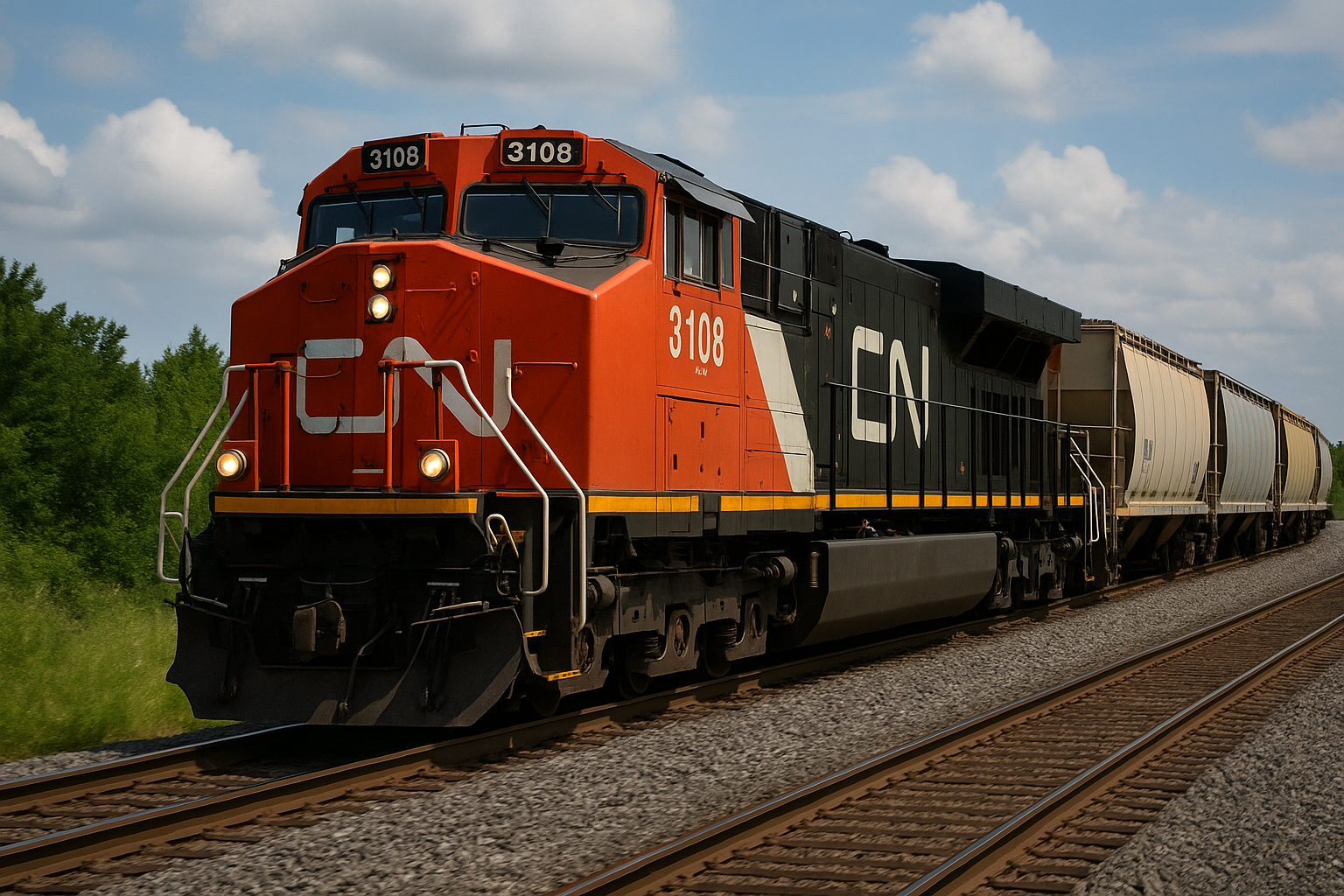
Canadian National Railway (TSX:CNR)(NYSE:CNI) recently reported its second quarter results of fiscal 2025, which wasn’t great but wasn’t all that troubling, either. CN reported that revenue ton miles—a key measure of freight volume—fell about 1% to 59.2 billion. The decline reflects softer demand for bulk commodities and consumer goods amid slower economic growth. The company also revealed that total revenue edged down 1 % to $4.3 billion. Those numbers might sound uninspiring, yet the railroad showed it can get more from less as operating income rose roughly 5% to $1.6 billion, thanks to pricing discipline, fuel‑savings initiatives, and better operating ratios.

CN’s narrative is not just about quarterly figures but about how it steers through external headwinds. The railway runs an extensive network linking three North American coasts; it is a bellwether for economic activity and trade flows. In recent months, CN has faced cross‑border tariff uncertainty and the prospect of new trade restrictions. Those concerns prompted management to withdraw the company’s 2024‑26 financial outlook and lower near‑term guidance. By removing targets, CN signaled that it cannot accurately forecast demand while governments debate new trade policies. Investors, who prize rails for their predictability, reacted by marking down the shares.
Beyond macro risks, CN is still investing in network upgrades, digitization and safety technologies, positioning itself for long‑term growth. Its diversified freight mix—ranging from grain and potash to intermodal containers—reduces reliance on any single commodity. Efficiency gains should keep margins healthy even if volumes remain flat. Long‑term investors may therefore view the recent share‑price weakness as an opportunity — the stock trades at just 18 times its trailing earnings. The key question is when trade uncertainty will ease and allow volumes to rebound. Until then, CN’s story is about balancing operational excellence against external volatility. Investors seeking steady dividends (CN stock yields 2.7%) and exposure to North American logistics may still find the stock appealing, but those looking for short‑term catalysts might prefer to wait for more clarity.